Everything a New Support Worker in the NDIS Needs to Know
- Jun 17
- 5 min read
Your complete guide to starting a rewarding career in disability support.
The National Disability Insurance Scheme (NDIS) has transformed the way disability services are delivered in Australia. At the heart of the NDIS are Support Workers; dedicated professionals who help participants live more independently, achieve their goals, and engage meaningfully with their communities.
If you’re new to the role, it can feel overwhelming. There are policies, responsibilities, legal requirements, and participant expectations to understand. This guide covers everything you need to know to build a successful and rewarding career as an NDIS Support Worker.
What Does an NDIS Support Worker Do?
An NDIS Support Worker assists people with disabilities to live as independently as possible while supporting their personal goals and wellbeing.
Every participant is different, which means every day can look different. Your role may include:
Personal care (showering, dressing, grooming)
Meal preparation and nutrition support
Community access and social participation
Transport to appointments and activities
Medication assistance (where qualified and authorised)
Household tasks and cleaning
Building independent living skills
Emotional support and encouragement
Supporting employment, education, and training goals

The most important thing to remember is that your role is not to take over a participant’s life. Your role is to empower them to do as much as possible for themselves.
Understanding the Principles of the NDIS
The NDIS is built on several core principles:
Choice and Control
Participants have the right to make decisions about:
Their supports
Their goals
Their providers
How they spend their NDIS funding
As a Support Worker, you must respect participant decisions, even when they differ from your personal preferences.
Capacity Building
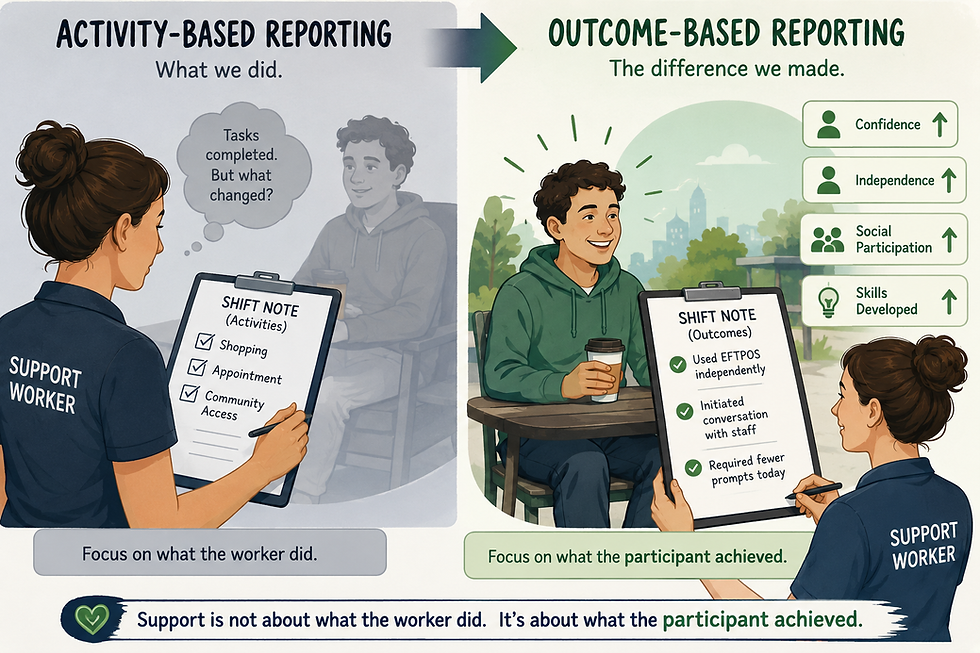
Good support is not about doing everything for someone. It is about helping participants develop skills, confidence, and independence.
For example:
❌ Doing all household tasks for a participant.
✅ Supporting the participant to learn and complete household tasks themselves.
Dignity of Risk
Participants have the right to take reasonable risks in life, just like everyone else.
Your role is to support informed decision-making while managing genuine safety concerns appropriately.
Essential Qualities of a Great Support Worker
While qualifications are important, personal qualities often make the biggest difference.
Successful Support Workers are:
Compassionate
Reliable
Respectful
Patient
Flexible
Honest
Professional
Good communicators
Emotionally resilient
Solution-focused
Participants often value consistency and trust more than technical skills.
Professional Boundaries Matter
One of the biggest challenges for new Support Workers is understanding professional boundaries.
Participants may see you regularly and develop a close relationship with you. While rapport is important, maintaining professional boundaries protects both you and the participant.
Avoid:
Lending or borrowing money
Accepting expensive gifts
Sharing personal problems
Providing services outside your role
Becoming involved in family disputes
Social media friendships (unless approved by organisational policy)
Do:
Be friendly and approachable
Maintain professional conduct
Follow organisational policies
Document concerns appropriately
Seek supervision when unsure
Remember: You are a professional support person, not a family member or best friend.
Duty of Care
Duty of Care means taking reasonable steps to ensure participant safety and wellbeing.
This includes:
Following support plans
Reporting hazards
Monitoring risks
Following safe work practices
Escalating concerns appropriately
Duty of Care does not mean removing all risk. It means balancing safety with participant rights and independence.
Understanding Participant Rights
Every participant has the right to:
Be treated with dignity and respect
Make their own decisions
Have privacy and confidentiality
Access culturally safe services
Live free from abuse, neglect, exploitation, and discrimination
Receive high-quality supports
These rights are protected under the NDIS Code of Conduct and broader Australian legislation.
The NDIS Code of Conduct
All NDIS workers must adhere to the NDIS Code of Conduct.
This requires workers to:
1. Respect Individual Rights
Treat participants with dignity and respect their freedom of expression, self-determination, and decision-making.
2. Provide Safe and Competent Supports
Work within your skills, training, and qualifications.
3. Act with Integrity
Be honest, ethical, and transparent.
4. Prevent Harm
Take action if you witness abuse, neglect, exploitation, or misconduct.
Failure to comply with the Code of Conduct can result in disciplinary action or exclusion from the NDIS workforce.
Recognising Abuse, Neglect, and Exploitation
Support Workers play a critical role in safeguarding participants.
Signs of Possible Abuse
Unexplained injuries
Fearfulness around certain individuals
Sudden behaviour changes
Financial irregularities
Poor hygiene or unmet care needs
Social isolation
If You Suspect Harm
Follow your organisation’s reporting procedures
Document facts accurately
Report concerns immediately
Do not investigate independently
Prioritise participant safety
Never ignore a concern because you are unsure.

Effective Communication Skills
Communication is one of the most important skills in disability support.
Best Practice Tips
Use respectful language
Listen actively
Speak directly to the participant
Avoid assumptions
Use plain language
Allow extra time when needed
Learn participant communication preferences
Many participants may use:
Visual supports
Communication devices
Auslan
Non-verbal communication methods
Good communication builds trust and improves outcomes.
Documentation and Progress Notes
Documentation protects participants, workers, and organisations.
Good case notes should be:
Objective
Accurate
Timely
Professional
Relevant
Example
Instead of:
“John was angry today.”
Write:
“John raised his voice during the shopping trip and stated he was frustrated because an item was unavailable.”
Document facts, not opinions.
Understanding Incident Reporting
An incident may include:
Injury
Medication errors
Aggressive behaviour
Missing participants
Property damage
Restrictive practices concerns
If an incident occurs:
Ensure immediate safety.
Notify your supervisor.
Complete required documentation.
Participate in follow-up actions.
Timely reporting helps prevent future incidents.
Medication Support
Medication support responsibilities vary between organisations and participant needs.
Never:
Administer medication beyond your training.
Alter dosage instructions.
Share medications between participants.
Always:
Follow medication administration procedures.
Complete required records.
Report medication errors immediately.
When in doubt, seek guidance before acting.
Infection Control and Workplace Safety
Support Workers often work in homes and community settings.
Good safety practices include:
Hand hygiene
Personal protective equipment (PPE)
Safe lifting techniques
Infection control procedures
Vehicle safety
Hazard identification
Protecting your own health is part of providing quality support.
Cultural Awareness and Inclusion
Australia is diverse, and participants come from many cultural backgrounds.
Support Workers should:
Respect cultural values and beliefs
Understand cultural communication differences
Avoid assumptions
Promote inclusion
Seek cultural guidance when needed
Particular consideration should be given to:
Aboriginal and Torres Strait Islander peoples
CALD communities
LGBTQIA+ participants
People from faith-based communities
Supporting Mental Health
Many NDIS participants live with psychosocial disabilities or mental health challenges.
Good support includes:
Active listening
Consistent routines
Encouragement
Recovery-oriented practice
Strengths-based approaches
Remember:
You are a support worker; not a therapist.
Your role is to support wellbeing while recognising when professional mental health intervention may be required.
Working as Part of a Team
Support Workers rarely work alone.
You may collaborate with:
Support Coordinators
Psychosocial Recovery Coaches
Allied Health Professionals
Behaviour Support Practitioners
Families and carers
Plan Managers

Effective teamwork ensures participants receive coordinated, high-quality supports.
Building a Long-Term Career in Disability Support
The disability sector offers many career pathways, including:
Senior Support Worker
Team Leader
Support Coordinator
Psychosocial Recovery Coach
Behaviour Support Practitioner
Allied Health Assistant
Community Services Management
Continuous learning and professional development will help you grow your career and improve participant outcomes.
Being an NDIS Support Worker is more than a job; it is an opportunity to make a meaningful difference in people’s lives every day.
The most successful Support Workers understand that quality support is built on respect, professionalism, empathy, and empowerment. By focusing on participant choice, maintaining professional boundaries, and continually developing your skills, you can create positive outcomes that genuinely improve the lives of the people you support.
Whether you’re assisting someone to attend a community event, learn a new skill, or achieve a long-term goal, your contribution matters.
The NDIS needs skilled, compassionate Support Workers; and your journey starts with understanding the principles that place participants at the centre of everything you do.